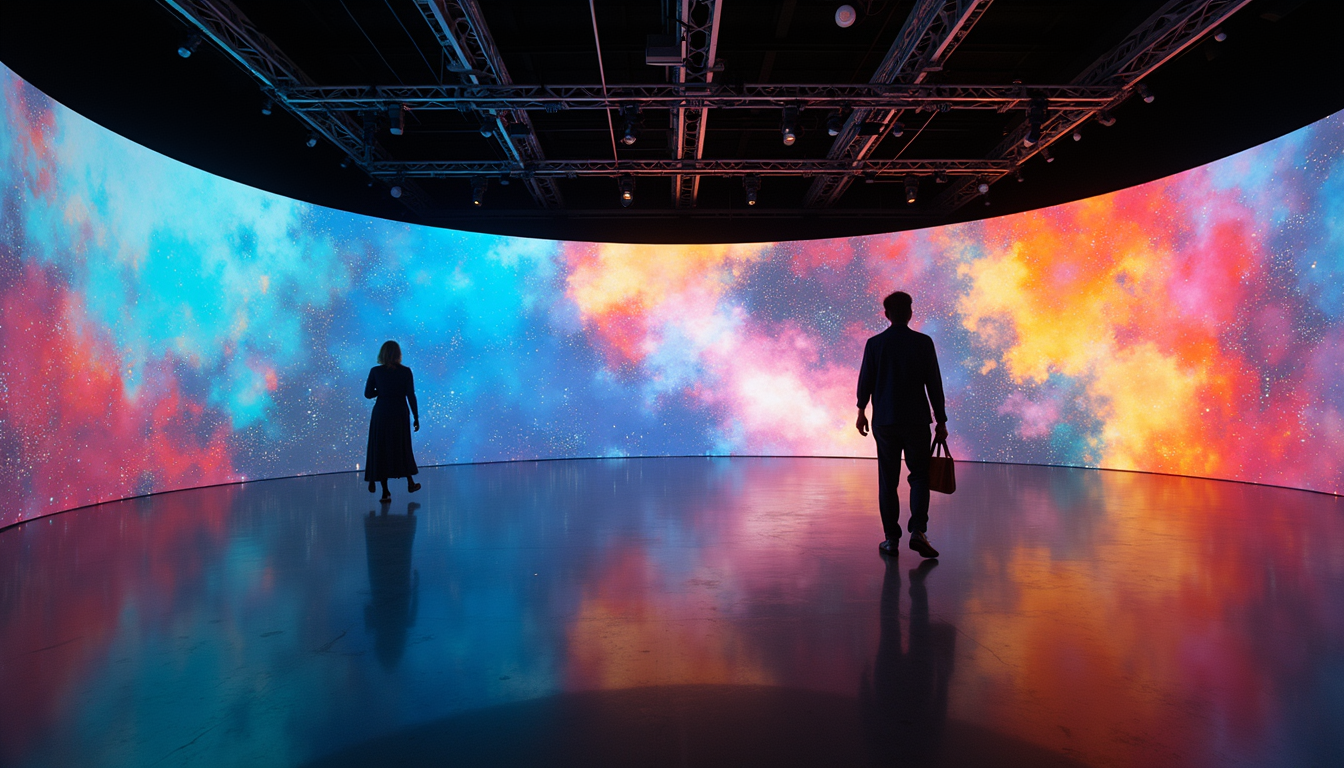
Let’s get something out of the way: projection mapping is not just “projecting images on a wall.” That’s called a PowerPoint. This is more like digital origami with light.
You take a 3D object—like a building, sculpture, or dessert—and wrap it in motion graphics that fit it perfectly. The result? Something that feels a little like special effects… but in real life, and without needing a Marvel-sized budget.
Whether you’ve seen a giant cathedral shimmer like stained glass, or a pop concert where the stage folds into impossible shapes—chances are, you’ve seen projection mapping in action.
How Does It Work?
Think of it like tailoring a suit—except the suit is made of moving light, and the mannequin might be a wedding cake or a warehouse wall.
Here’s the short version:
- Measure or scan the object you’re mapping onto.
- Design visuals that match the object's shape, edges, and angles.
- Warp and align the visuals using software so they land exactly where they’re supposed to.
- Project it all using a high-lumen projector (translation: it needs to be bright enough to outshine your uncle’s iPhone flashlight).
It’s part technical wizardry, part digital puppetry, and part trial-and-error with snacks. The projector becomes a brush, the surface becomes the canvas, and the illusion becomes… kind of magical.
What Can You Do With It?
Good question. That’s where things get interesting.
- Weddings: Imagine a cake that glows, sparkles, or tells your love story in animated scenes. It’s less messy than fireworks and a lot harder to forget.
- Events & Installations: Map an entire building for a block party. Animate a sculpture in a gallery. Turn a boring product booth into something people actually want to photograph.
- Theater & Performance: Set changes without lifting a finger. Environments that shift in real time with the emotion of a scene.
- Retail & Interior Design: Mood lighting that’s dynamic. Product displays that literally come to life.
- Home DIY: Rare, but technically possible. If you’ve got a projector and a wall, you could be mapping right now.
Why I’m Picky About Projects
There’s no “template” for projection mapping. Every project is built from the ground up. So when I take something on, I want it to be worth the time, energy, and loss of sleep.
I’m especially interested in:
- Weddings with character (especially those where the cake is the star for five glorious minutes)
- Events that want a true “wow” moment—not just a slideshow
- Small-scale experimental installations where art meets tech meets curiosity
If you’re just looking for a rented projector and someone to press play—that’s not me. But if you’re dreaming up something unusual, immersive, or just a little weird (in a good way), I’d love to hear about it.
A Quick Detour Into Inspiration
What inspires me? People. Stories. Everyday moments.
I’ve always been fascinated by the idea that everyone has a story. Even the person you sit next to on a train for five minutes—they’ve got decades of backstory, heartbreaks, victories, routines, and dreams you’ll never know about.
That invisible richness—that’s what I try to tap into, whether I’m building a visual moment or capturing a quiet scene on camera.
I don’t create to explain things. I create to slow them down—so we can actually notice them.
Want to Try Projection Mapping?
- It’s more accessible than you think.
- For larger projects, you’ll want someone who knows what they’re doing (hi 👋).
- Most people don’t know it’s even an option. That’s why I do it.
If you’re planning something and want it to stand out, consider projection mapping. It doesn’t just decorate a space—it transforms it.
Let’s Talk
If you're curious, reach out. I might not take every project—but if it’s got the right mix of creative spark, storytelling potential, and technical challenge, I’m all in.
And if you’re wondering what kind of projector I recommend, or whether your venue is even possible to map, I’m happy to chat. No hard sell. Just real answers.